 oks-ui
Fathom template
A complete multi-page admin: a dashboard, public profiles, account and security settings, billing, team and role management, a network directory, a storefront with checkout, and the sign-in flows. Every interface element is an oks-ui component; Tailwind CSS is used only for layout.
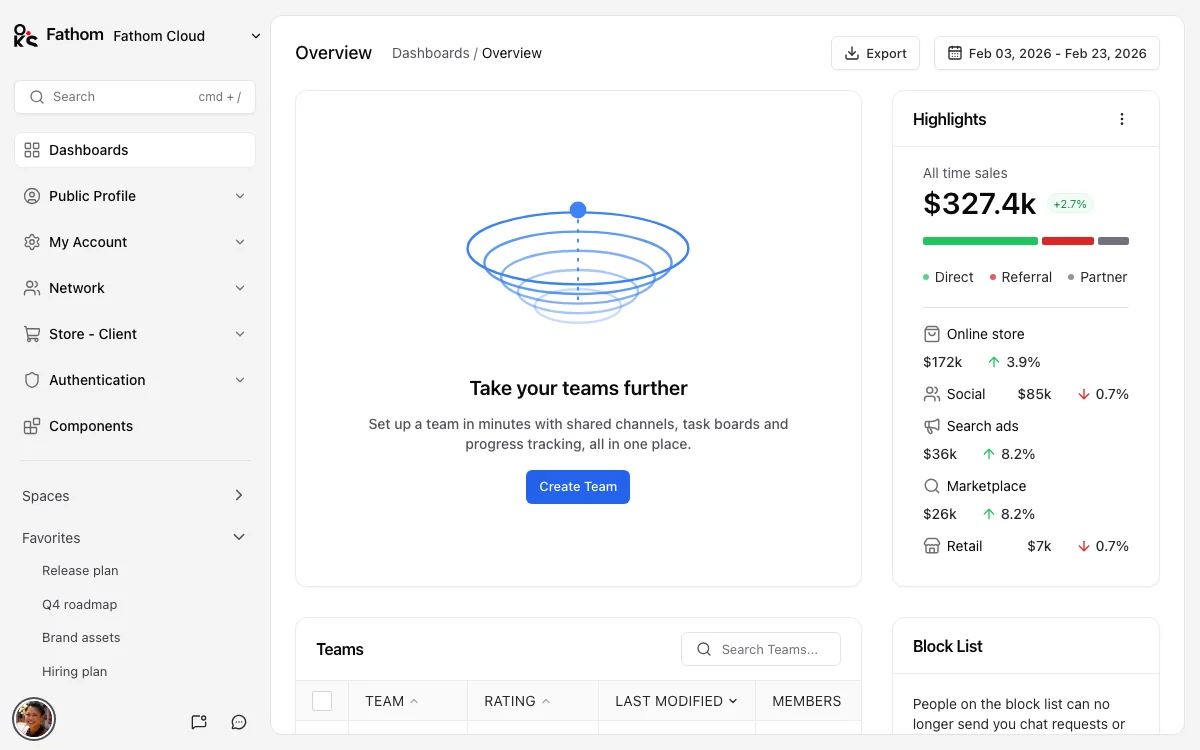
- Screens
- 96
- oks-ui components
- 20
- Theme
- light
- Source
- Public
- Licence
- MIT
- Built with
- Next.js 16 · React 19 · TypeScript
What Fathom shows
Account pages in depth
Four settings layouts, billing plans and history, security, members and roles, integrations, API keys and appearance.
A storefront with checkout
Store home, search results, product details, a wishlist, a four-step checkout, orders and a receipt.
Built with oks-ui
- Admin
- Account & billing
- Store
- Authentication
Fathom uses 20 of the 45 oks-ui components and nothing else for its interface: no second UI kit and no hand-rolled widgets. Every control you see in the live app is one you can browse and try in the components gallery, and the screens are built the way the patterns show.
Questions about Fathom
What is Fathom?
Fathom is multi-page admin with a storefront, built only with oks-ui. A complete multi-page admin: a dashboard, public profiles, account and security settings, billing, team and role management, a network directory, a storefront with checkout, and the sign-in flows. Every interface element is an oks-ui component; Tailwind CSS is used only for layout.
How big is Fathom?
Fathom has 96 screens and 20 oks-ui components, counted from its source rather than estimated.
Can I try Fathom before using it?
Yes. Fathom is hosted and running, so you can click through the real application at oks-projects.github.io/fathom before reading any code.
Is the source of Fathom public?
Yes. The source is on GitHub under the MIT licence, so you can read it, copy parts of it and build on it.
What is Fathom built with?
Next.js 16 · React 19 · TypeScript, with every interface element coming from oks-ui and its design tokens.
More templates
- oks-projects.github.io/astrobit
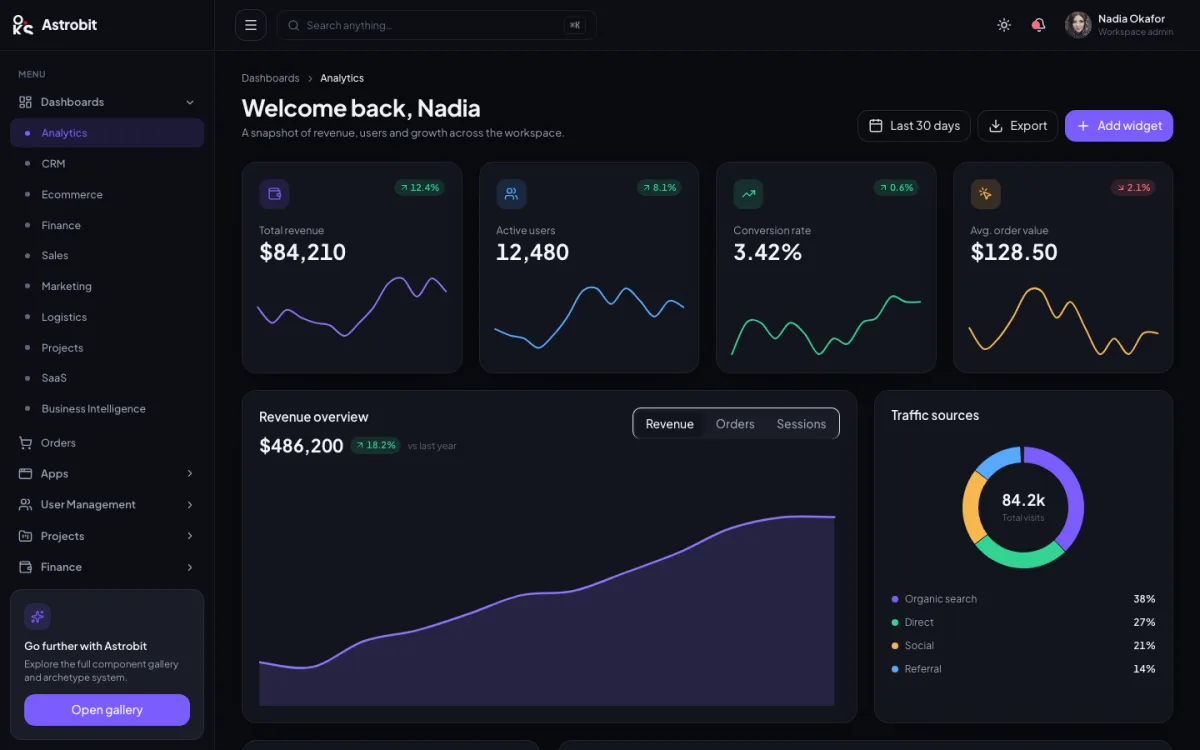
Astrobit
Dark-first analytics workspace
- Analytics
- Dark UI
- Charts
- Command palette
- Screens
- 166
- Components
- 32
- oks-projects.github.io/bilkoss
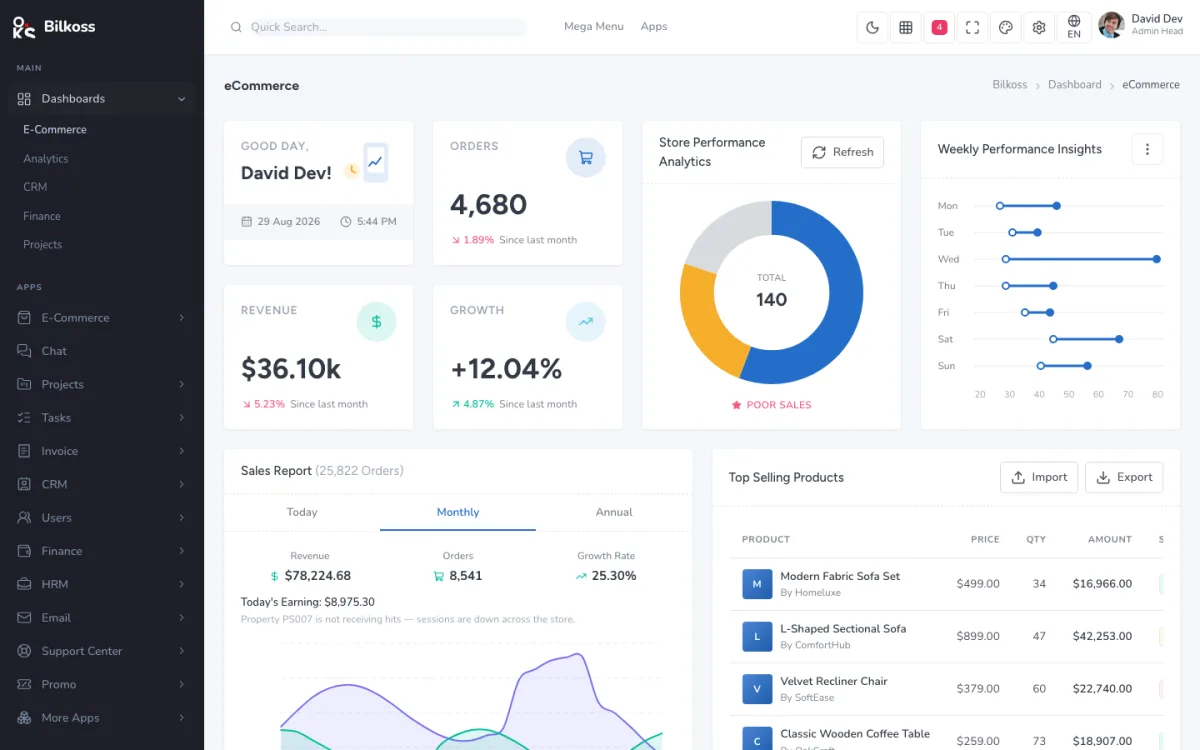
Bilkoss
Light e-commerce admin
- E-commerce
- Admin
- Dashboards
- Data tables
- Screens
- 153
- Components
- 34
Hosted at oks-projects.github.io/fathom. See all 7 templates